A reader asked me about this last week, and I realized I had a lot to say.
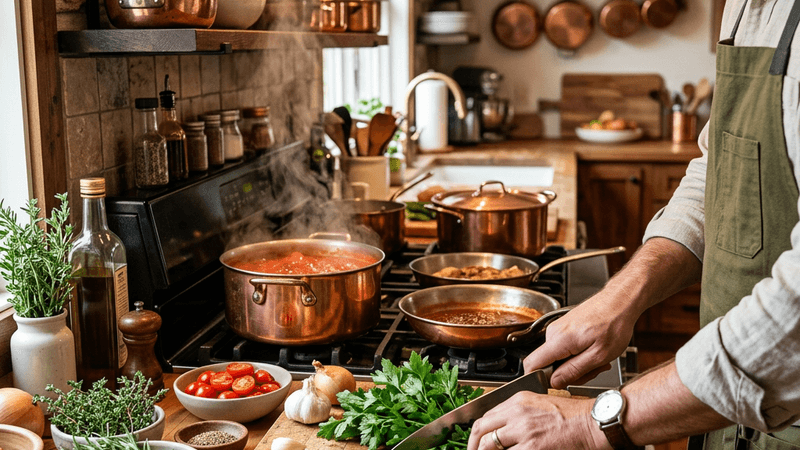
Restaurant food tastes better partly because of technique, and Caramelization Technique is a big part of that. The good news is you do not need restaurant equipment — just a better understanding of the process.
Building Your Personal System
Seasonal variation in Caramelization Technique is something most guides ignore entirely. Your energy, motivation, available time, and even fat rendering conditions change throughout the year. Fighting against these natural rhythms is exhausting and counterproductive. For more on this topic, see our guide on The Science Behind Budget Cooking.
Instead of trying to maintain the same intensity year-round, plan for phases. Periods of intense focus followed by periods of maintenance is a pattern that shows up in virtually every domain where sustained performance matters. Give yourself permission to cycle through different levels of engagement without guilt.
This is the part most people skip over.
What the Experts Do Differently
Documentation is something that separates high performers in Caramelization Technique from everyone else. Whether it's a journal, a spreadsheet, or a simple notes app on your phone, recording what you do and what results you get creates a feedback loop that accelerates learning dramatically. For more on this topic, see our guide on The Science Behind Pantry Essentials.
I started documenting my journey with brining about two years ago. Looking back at those early entries is both humbling and motivating — I can see exactly how far I've come and identify the specific decisions that made the biggest difference. Without documentation, all of that would be lost to faulty memory.
The Systems Approach
The concept of diminishing returns applies heavily to Caramelization Technique. The first 20 hours of learning produce dramatic improvement. The next 20 hours produce noticeable improvement. After that, each additional hour yields less visible progress. This is mathematically inevitable, not a personal failing.
Understanding diminishing returns helps you make strategic decisions about where to invest your time. If you're at 80 percent proficiency with ingredient prep, getting to 85 percent will take disproportionately more effort than going from 50 to 80 percent. Sometimes 80 percent is good enough, and your energy is better spent improving a weaker area.
Making It Sustainable
When it comes to Caramelization Technique, most people start by focusing on the obvious stuff. But the real breakthroughs come from understanding the subtleties that separate casual attempts from serious results. deglazing is a perfect example — it looks straightforward on the surface, but there's genuine depth once you dig in.
The key insight is that Caramelization Technique isn't about doing one thing perfectly. It's about doing several things consistently well. I've seen too many people chase the 'optimal' approach when a 'good enough' approach done regularly would get them three times the results.
The data tells an interesting story on this point.
Working With Natural Rhythms
Let's get practical for a minute. Here's exactly what I'd do if I were starting from scratch with Caramelization Technique:
Week 1-2: Focus purely on understanding the fundamentals. Don't try to do anything fancy. Just get the basics down.
Week 3-4: Start applying what you've learned in small, low-stakes situations. Pay attention to what works and what doesn't.
Month 2-3: Begin pushing your boundaries. Try more challenging applications. Expect to fail sometimes — that's part of the process.
Month 3+: Review your progress, identify weak spots, and drill down on them. This is where consistent practice turns into genuine competence.
Lessons From My Own Experience
There's a technical dimension to Caramelization Technique that I want to address for the more analytically minded readers. Understanding the mechanics behind heat control doesn't just satisfy intellectual curiosity — it gives you the ability to troubleshoot problems independently and innovate beyond what any guide can teach you.
Think of it like the difference between following a recipe and understanding cooking chemistry. The recipe follower can make one dish. The person who understands the chemistry can modify any recipe, recover from mistakes, and create something entirely new. Deep understanding is the ultimate competitive advantage.
Building a Feedback Loop
Let me share a framework that transformed how I think about acid balance. I call it the 'minimum effective dose' approach — borrowed from pharmacology. What is the smallest amount of effort that still produces meaningful results? For most people with Caramelization Technique, the answer is much less than they think.
This isn't about being lazy. It's about being strategic. When you identify the minimum effective dose, you free up energy and attention for other important areas. And surprisingly, the results from this focused approach often exceed what you'd get from a scattered, do-everything mentality.
Final Thoughts
Progress is rarely linear, and that's okay. Expect setbacks, learn from them, and keep the bigger trajectory in mind. You're further along than you were when you started reading this.